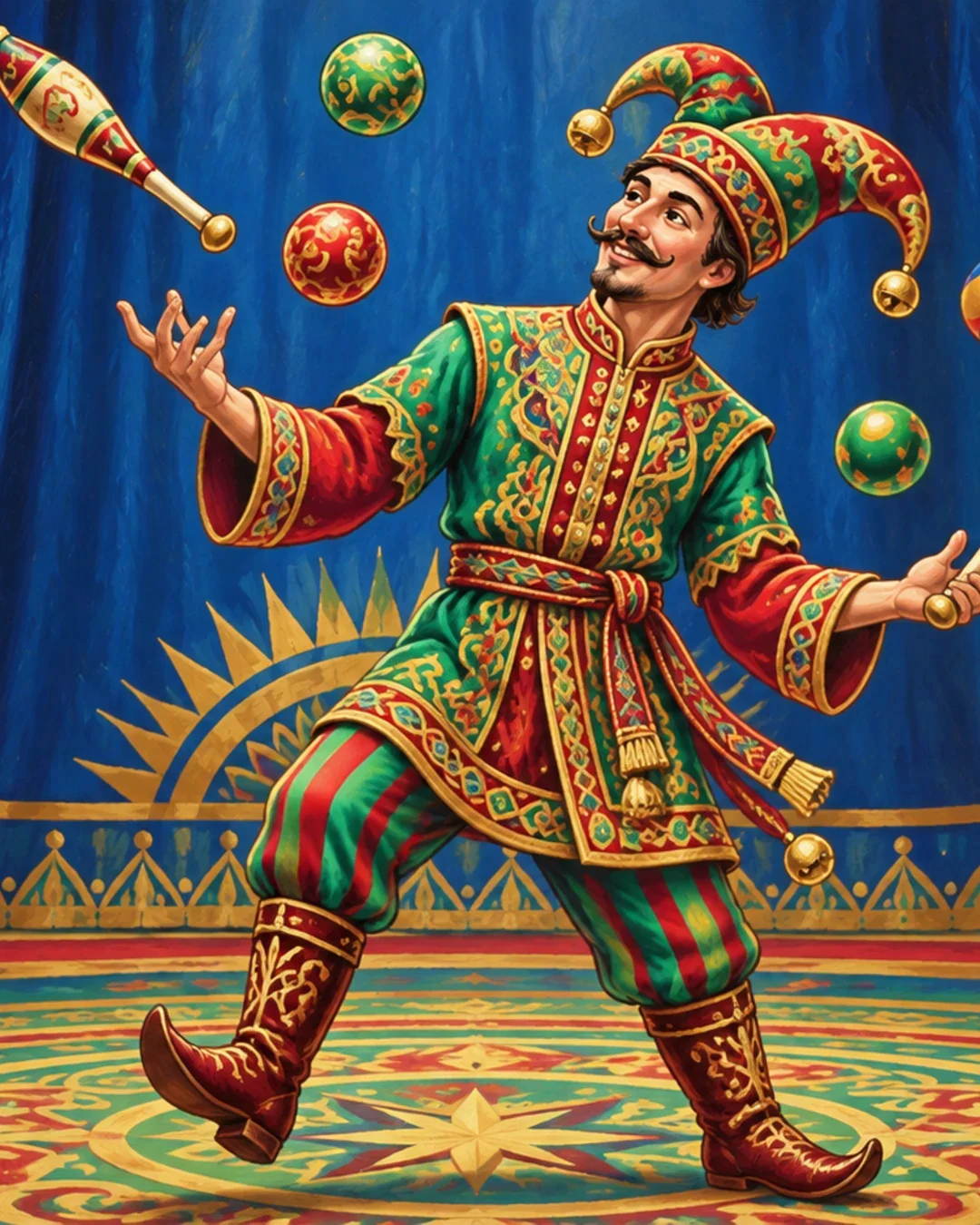
What juggling and equilibristics are
These are two neighbouring genres that almost always sit side by side in a programme. Juggling is work with objects: balls, clubs, rings, hats. Equilibristics is work with balance: the slack wire, rolla bolla, unicycle, handstands.
One thing unites them: in these genres there is no partner to lean on and no way to hide a mistake. The object is either in the hand or on the ring floor.
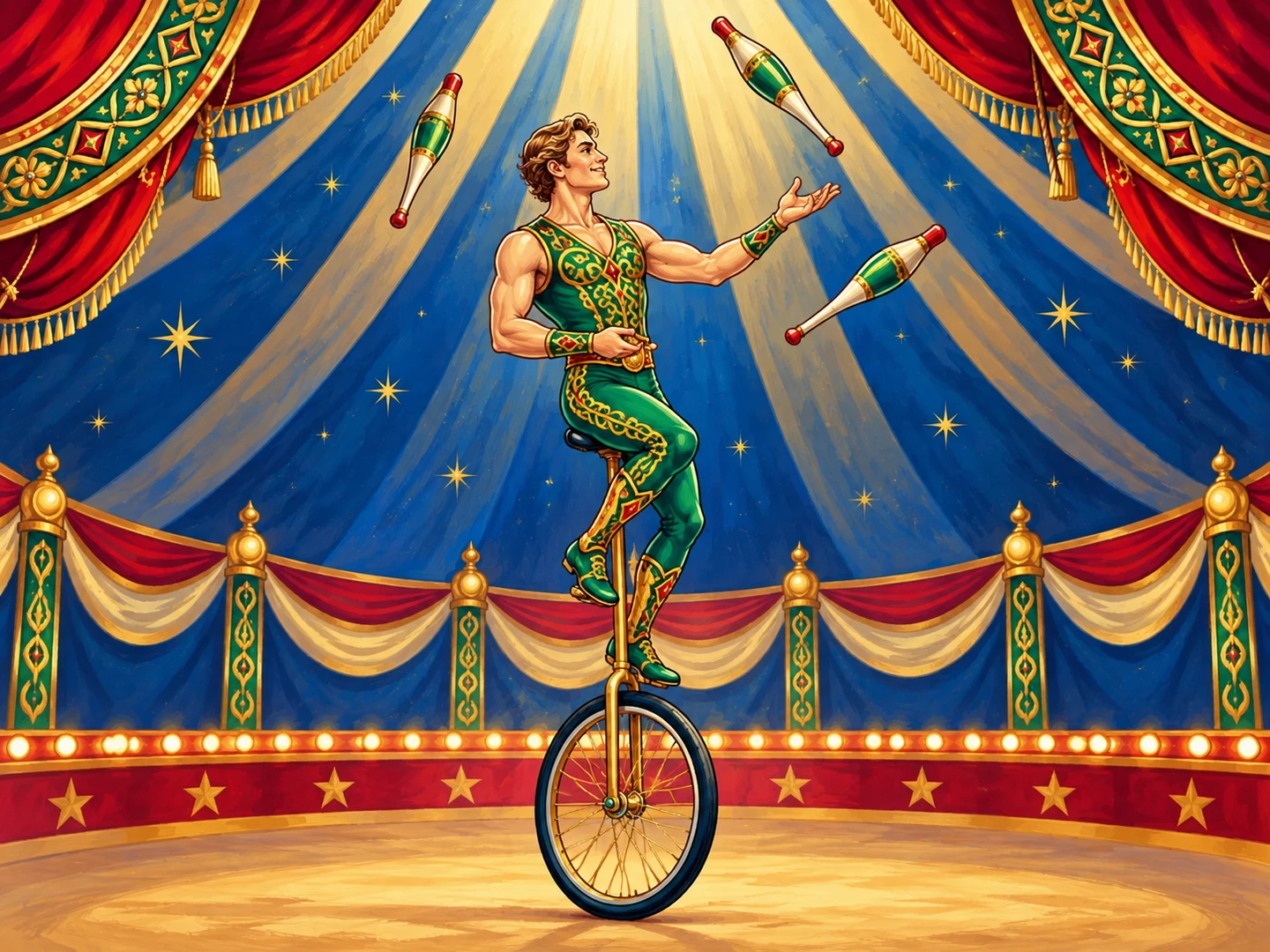
What makes this genre work
Juggling is that rare case where the audience counts along with the performer. Three objects, four, five — the rise in difficulty is visible without explanation, and the hall reacts to every one added. Equilibristics works differently: it holds the hall in silence, because balance cannot be hurried and cannot be spotted.
How the genre works
- the act is built upward: from confident technique to the edge of what is possible;
- props are chosen individually — every performer has their own weight and balance;
- a draught, light in the eyes or an uneven ring floor affect the act more than in any other genre;
- performers in this genre often work in clowning too: the technique lets them play a “failure” as a joke.
The role of the genre in the programme
Juggling and equilibristics are a change of register. After a loud group act they move the audience's attention from scale to detail: instead of ten performers one is left in the ring, and for a few minutes the whole programme narrows to a single object in the air.
Training
Behind the clean technique of these genres lie years of daily repetition: the number of objects grows slowly, and consistency matters more than a record. Before every performance the artists test their props in that particular hall — lighting and ceiling height change the trajectory.