What clowning is
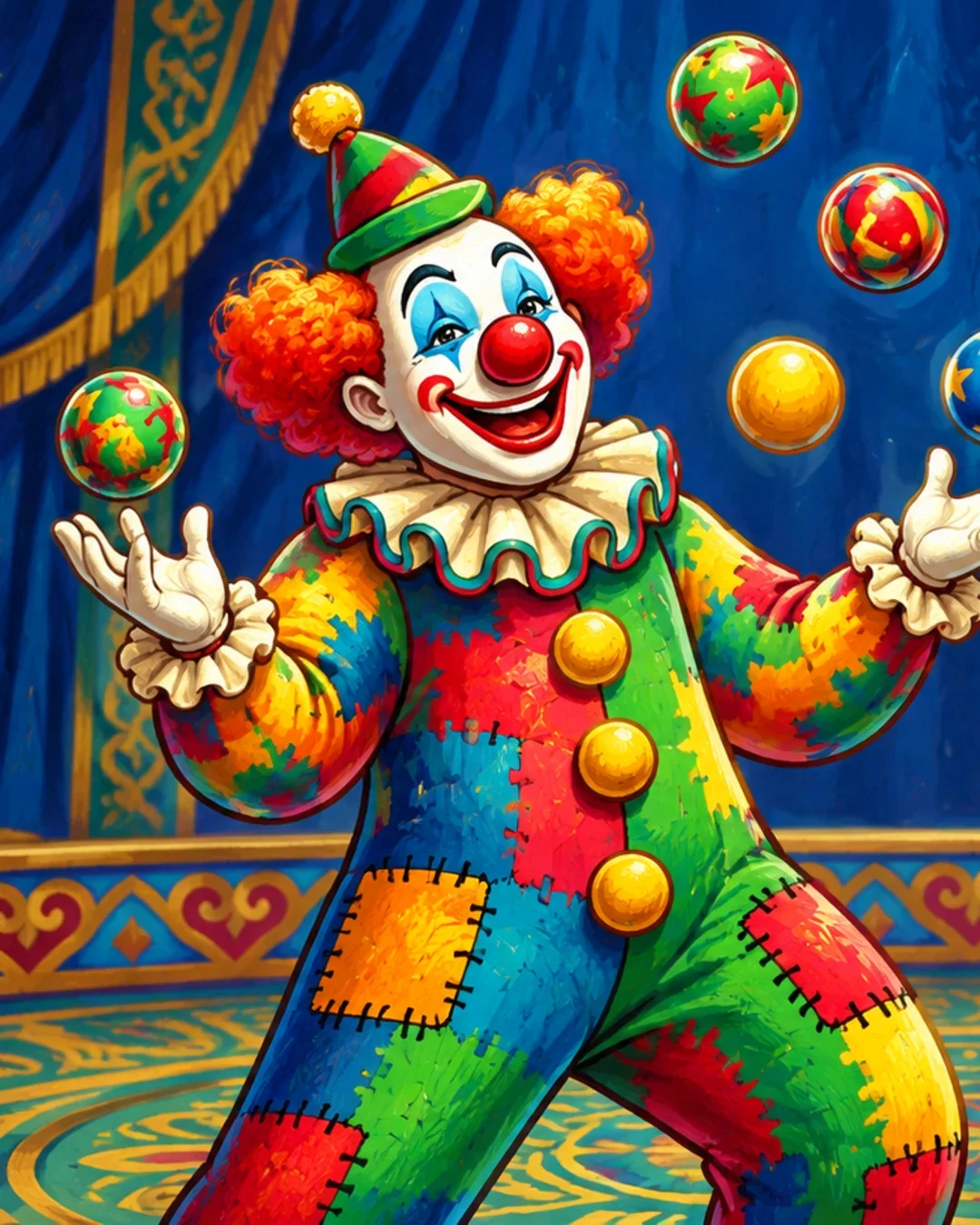
Clowning is circus comedy built on character. A clown has a mask: a set of habits, a walk, a way of reacting to failure. Everything else — the routine, the props, the partner in the act — exists to reveal that character.
The genre rarely lives as a standalone five-minute act. More often the clown appears between other acts, and in family programmes leads the audience through the whole show as a running character.
What makes this genre work
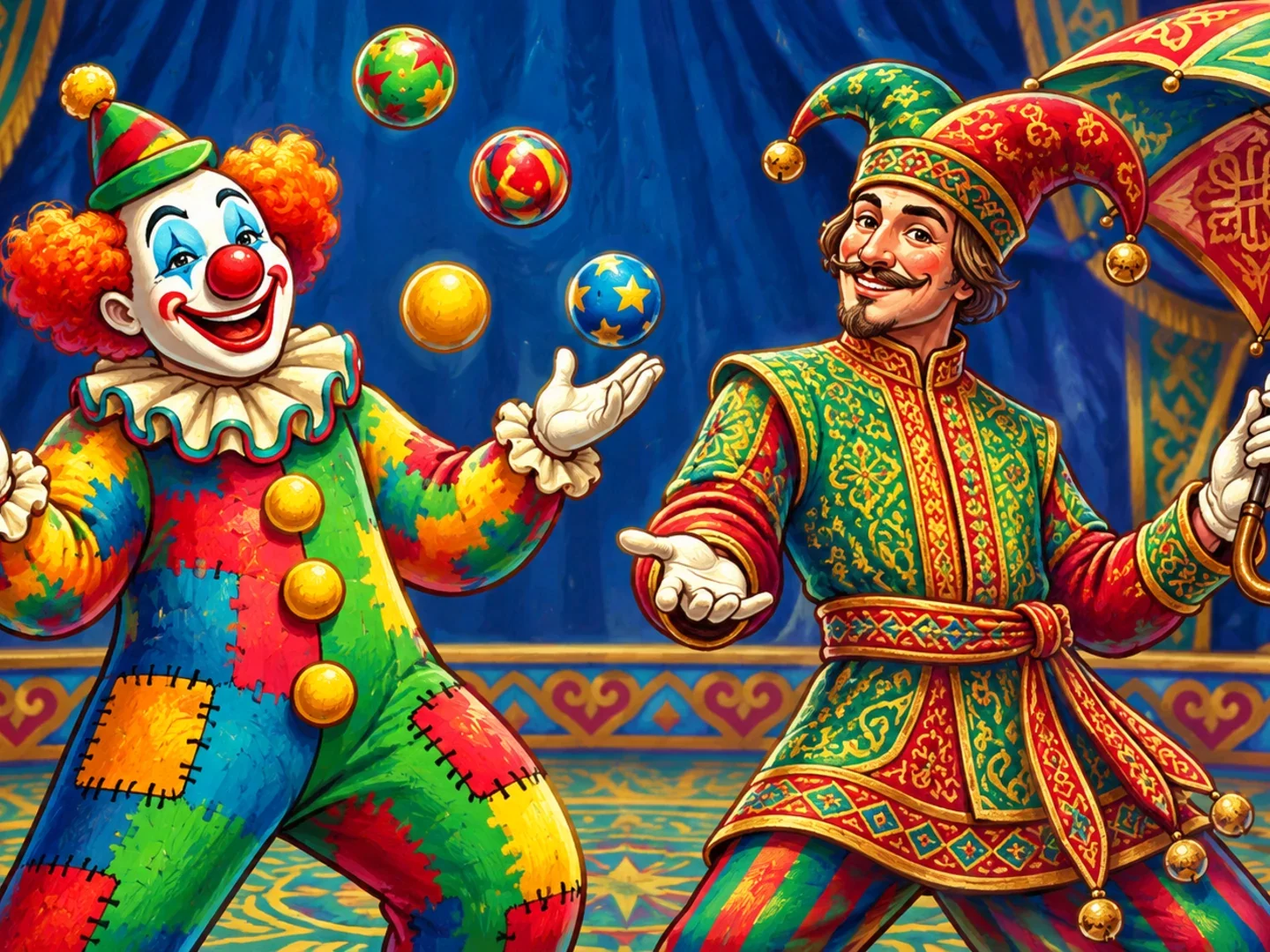
Clowning is the only genre of the ring that speaks to the audience directly. A child in the front row stops being a spectator and becomes a participant; an adult laughs at recognising themselves in the clown. A good routine works without words, so the genre has no language barrier — which matters especially on tour.
How the genre works
- the clown works the gaps: while props are changed backstage, he holds the ring;
- a routine almost always builds on repetition — the joke returns a second and third time with a new twist;
- humour in a family programme stays free of coarseness: clear to a child and not dull for an adult;
- improvisation is allowed, but the frame of the routine is always rehearsed.
The role of clowning in the programme
The clown is the show's breathing. After an aerial act or work with big cats the hall is tense, and a routine releases that tension, preparing the audience for the next episode. Without clowning a two-hour programme becomes a run of tricks with no pauses.
Craft, not just “being funny”
A clown almost always commands a second genre: juggling, equilibristics, illusion or acrobatics. The comedy is built on a trick “not working” — and to fail it convincingly you have to be able to do it cleanly.