What circus animal training is
An animal act is joint work by trainer and animal, built on habit and reinforcement. The performer does not “make” the animal do an element: they build a sequence the animal knows and is comfortable in. That is why such acts run at their own pace — noticeably calmer than acrobatics.
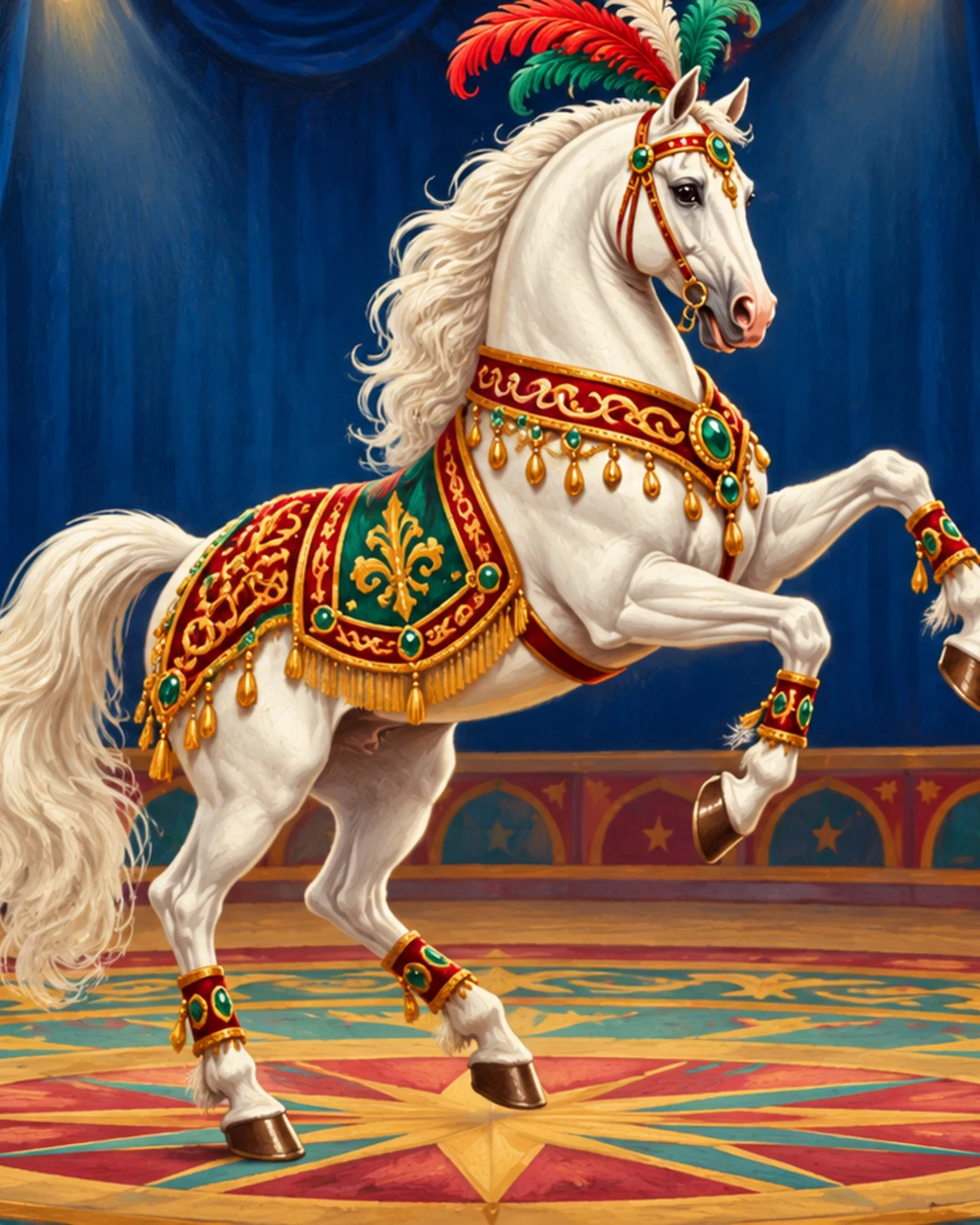
The animals in the ring vary widely: from sea lions and cats to horses and large predators. The logic of the work is the same for all of them, but the preparation and the demands on the venue differ enormously.
What makes this genre work
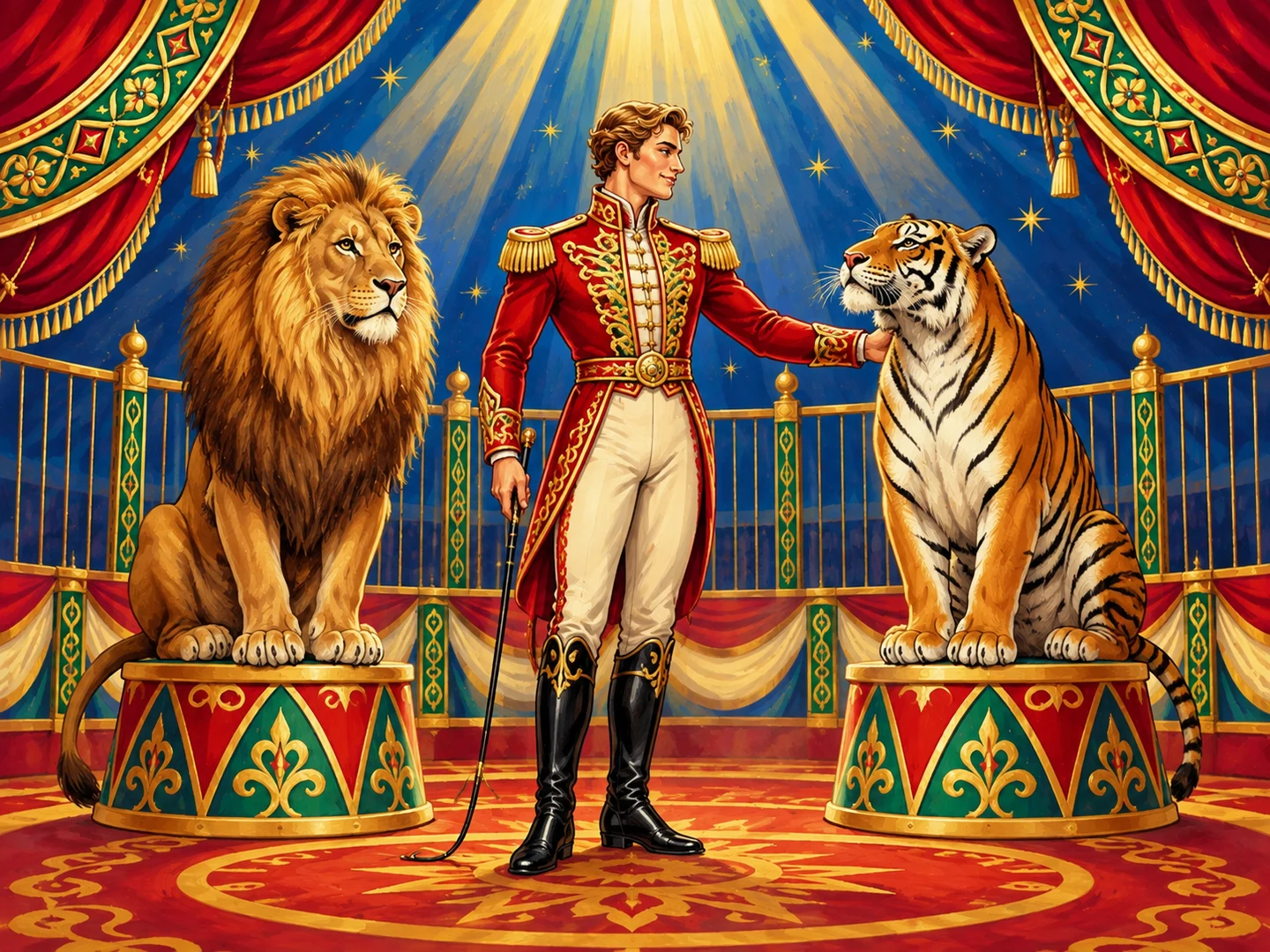
This is the warmest genre in the programme and almost always the loudest in terms of children's reaction. What the audience sees is not a trick but a relationship: how the animal looks at its trainer, waits for the signal, delights in finishing an element. After such an act the hall exhales and starts talking.
How the genre works
- the act cannot be sped up: the animal sets the pace, not the script;
- trainer and animal work as a pair for years — neither can be swapped out;
- each species has its own conditions for transport, housing and rest on tour;
- on tour the act carries an extra layer of paperwork — the veterinary requirements of the country and the venue.
The role of animal acts in the programme
An animal act is a pause inside the programme. It is placed after tense episodes: the hall switches from awe to affection, and attention returns fresh for the next difficult trick. In family programmes such an act often becomes the main draw.
Preparation and responsibility
Work with animals is the most tightly regulated part of a tour. Veterinary paperwork, housing and transport conditions, work and rest schedules — all of it is prepared long before the first performance and remains the company's responsibility along the whole route.