What aerial gymnastics is
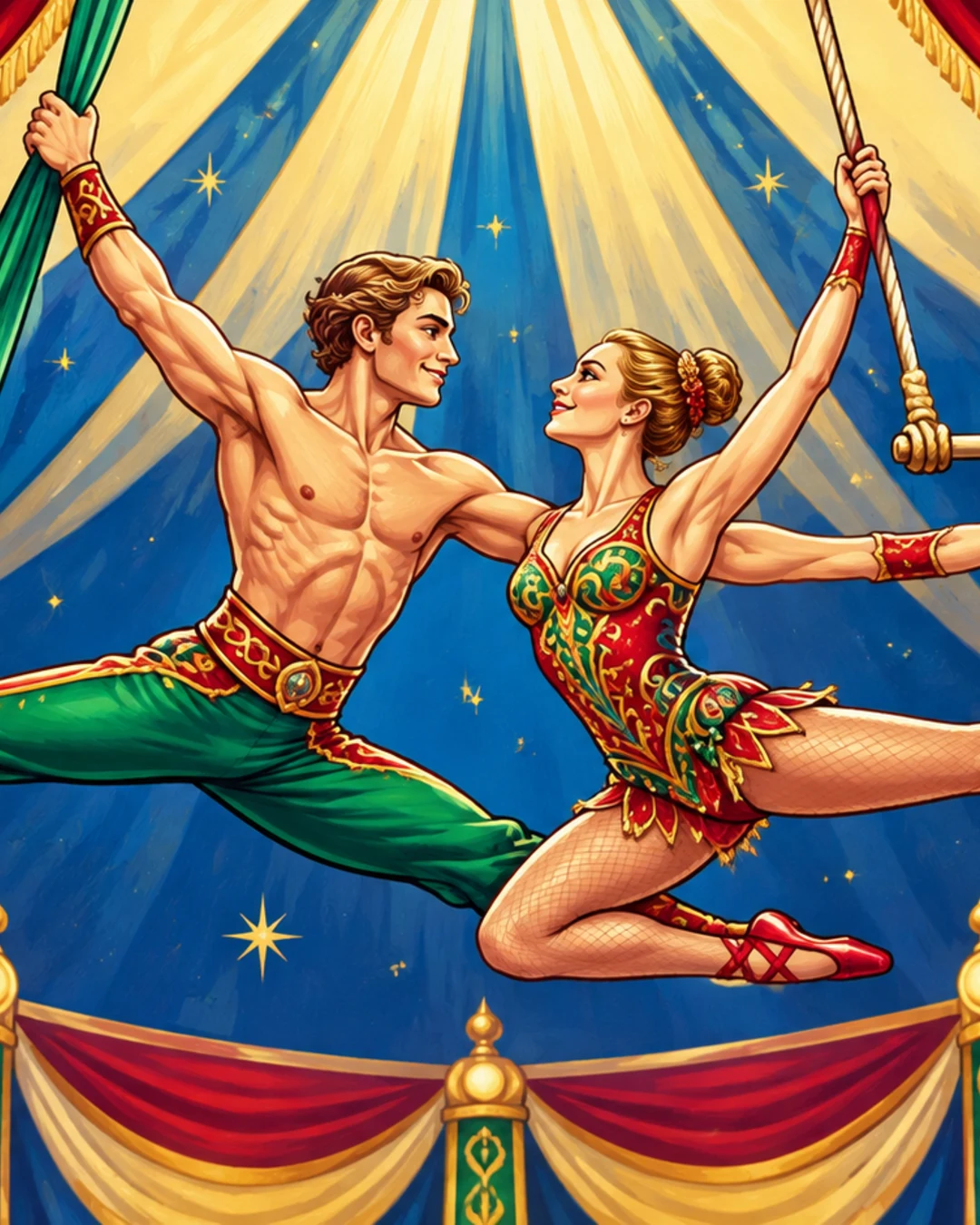
Aerial gymnastics is work on apparatus hung under the circus dome. There are several kinds, and each has its own character: silks give long flowing lines and drops, the hoop gives static shapes and spins, the trapeze gives swing and flight. The flying act is a separate form, where performers pass each other hand to hand at the top of the swing.
All the apparatus have one thing in common: the aerialist has no support underfoot. Every element rests on grip strength, core work and precise timing.
What makes this genre work
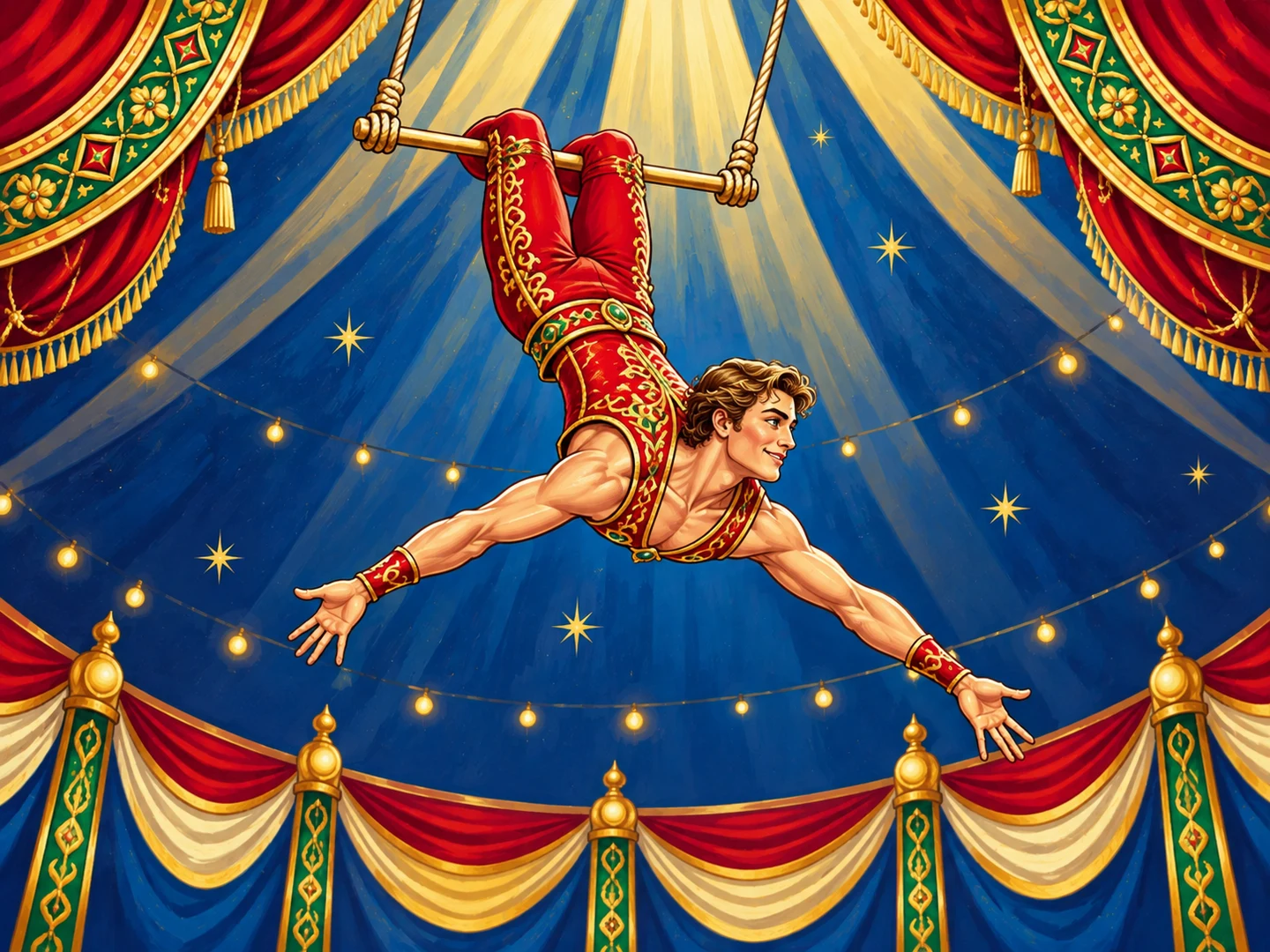
Aerial work is the only genre that makes the audience look up. Viewers feel the height physically, so even a technically simple element reads as risk. The second thing is silence: extra noise is usually cut for an aerial act, and for a few minutes the hall holds only music and breathing.
How the genre works
- the act depends on the venue: dome height and rigging points are required, so aerial work is agreed with the hall in advance;
- the performer works in tandem with a rigger — the whole choreography depends on how the rig is set;
- the act almost always builds upward: shapes and lines first, then a drop or a flight as the climax;
- costume and light are part of the technique here, not decoration: they make the silhouette readable from the back row.
The role of aerial work in the programme
An aerial act is almost never placed at the start. Its place is the climax of the half: after a dense run of ground genres the audience looks up and the tension jumps. Aerial work is usually followed by a release — a clown routine or an animal act.
Safety and training
Aerial acts run only with safety rigging, and the rig is checked at every venue before rehearsal. On Circus Asia tours the safety lines, the rigging and the rehearsal protocol are handled by the company's own technical team, not by the host hall. The act itself is the result of years of training: this genre allows no improvisation at the top.