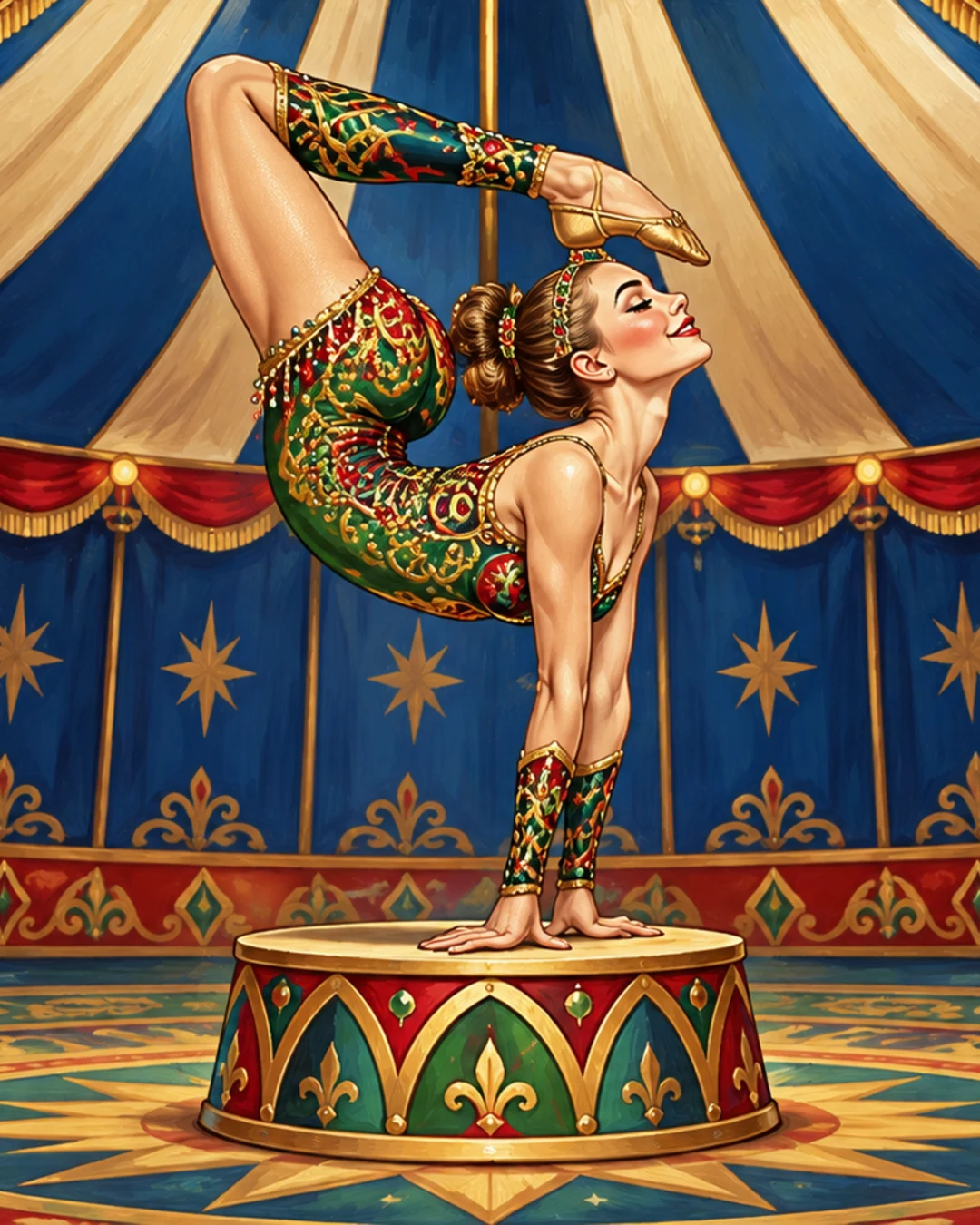
What circus acrobatics is
Acrobatics in the ring is work with your own body and with a partner's. The genre splits into several branches: duo acrobatics, where one performer holds another; group work, which builds pyramids and columns; and tumbling — teeterboards, trampoline, somersaults from height.
Unlike aerial work, acrobatics happens at the audience's eye level. A mistake is visible at once, so clean execution counts for more than difficulty.
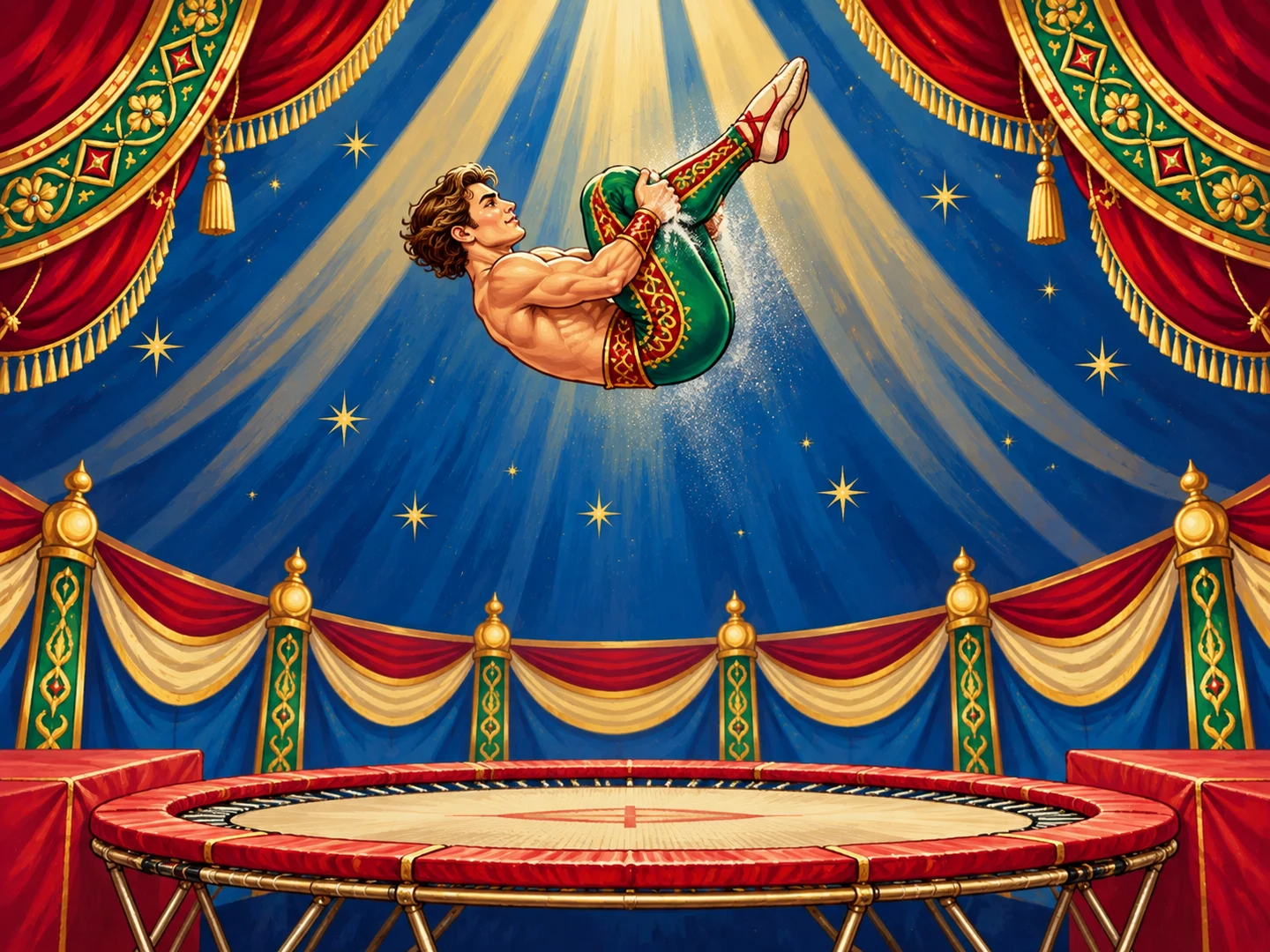
What makes this genre work
Acrobatics is the most immediately legible genre of the ring. Viewers need no terminology: they roughly know what it takes to hold a person on an outstretched arm or turn a running somersault. Hence the direct reaction — an acrobatic trick is applauded inside the act, not after it.
How the genre works
- the act runs on a count: partners share one rhythm rather than each keeping their own;
- weight and height are matched to a specific trick — the line-up of a troupe barely changes for years;
- group acts require an even, firm ring floor;
- the music sets the pace: an acrobatic sequence is almost always built to a specific score.
The role of acrobatics in the programme
An acrobatic act often opens a half: it sets the energy and pace the rest of the programme rides on. Mid-half, acrobatics works as a run-up to the aerial act, and in the finale group pyramids bring almost the whole troupe into the ring.
Safety and training
An acrobatic trick is never improvised: every sequence is drilled to automatism in rehearsal, and before going on the troupe always runs the act in the conditions of that particular hall. On Circus Asia tours the requirements for the ring floor, the safety measures and the rehearsal protocol are handled by the company's technical team.