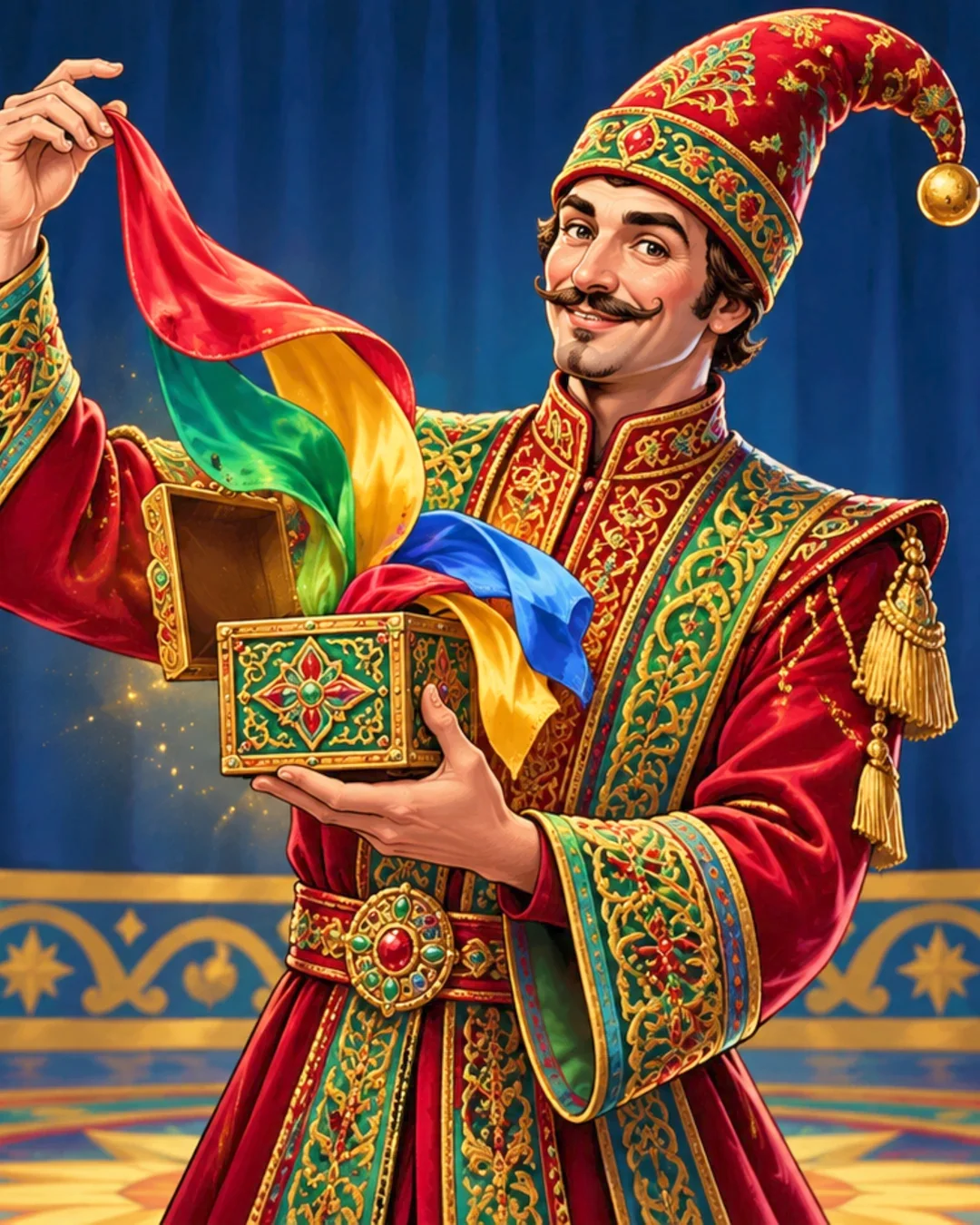
What circus illusion is
Illusion in the circus is not a table trick but an act designed for viewing in the round. The ring is visible from every side, the audience sits all around it, and there is nowhere to hide the preparation. Hence the name of the genre — large-scale illusion: it is built on the scale of the props, on light and on a flawlessly timed moment.
The illusionist's main instrument is the audience's attention. The act leads the viewer to where nothing is happening and ends where they were not looking.

What makes this genre work
Illusion is the only genre of the ring where the viewer keeps thinking after the act. An acrobatic trick ends with the applause, but “how was that done” leaves the hall with the audience and lives on for days.
How the genre works
- viewing in the round dictates the whole construction of the act;
- light is an equal participant here: a change of beam is part of the trick, not decoration;
- the large props travel with the troupe and need their own set-up at the venue;
- illusionists often work in clowning too — both genres need direct contact with the audience.
The role of illusion in the programme
Large-scale illusion almost always sits near the end of a half: it draws the audience's attention to a single point and leaves the feeling that the evening ended in surprise. In programmes where the illusionist also hosts the show, the genre becomes the frame for everything.
Training
An illusion act is rehearsed in the hall where it will be shown: the front row's sightline, the dome height and the position of the lights change everything. Setting up the large props is written into the tour schedule in advance, together with the venue's technical rider.